







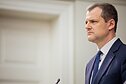





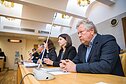


After the European Commission withheld some of the funds under the Economic Recovery Plan, Lithuania’s government is presenting a package of tax reform proposals. However, even some ruling parties are sceptical about passing them.
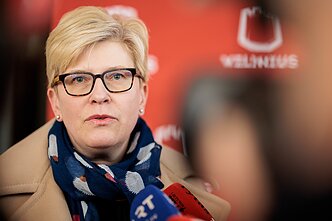
Prime Minister Ingrida Šimonytė says that the government will submit a draft proposal for a universal property tax and scrapping some tax exemptions next week, as soon as the parliament assembles for its spring session.
According to Šimonytė, Lithuania has agreed with the European Commission to submit these laws in order to receive support from the Recovery and Resilience Facility (RRF).
“I very much hope that the Seimas [parliament] will adopt these bills for consideration, because it depends on this, in fact, whether Lithuania will be able to receive all the support it is entitled to from the RRF,” Šimonytė said.
Lithuania has asked for 560 million, but the European Commission has so far approved 540 million, withholding the rest because Lithuania has promised, but not delivered, changes to environmental taxes and phasing out some tax exemptions.
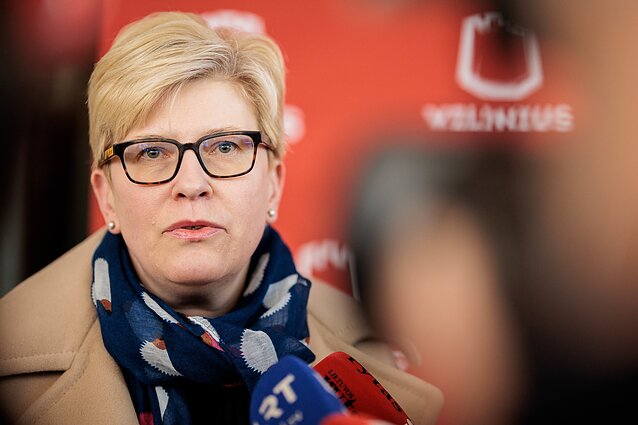
“The review of tax exemptions and the abolition of a large part of them will surely be supported – we are fine with the universal principle of taxing real estate,” says Eugenijus Gentvilas, leader of the Liberal Movement group, which is part of the ruling coalition.
Property taxes – which currently apply only to high-value real estate and are paid by a relatively small fraction of the population – should be used to give municipalities an independent source of revenue. “The principle of real estate tax revenue being transferred to municipal budgets is also acceptable,” according to Gentvilas.
However, another ruling coalition partner, the Freedom Party, is more sceptical about the proposals. The party’s chairwoman says now is not the time for a property tax.
“The bills have not been registered yet and the government has not yet decided anything on the individual proposals. But, as you know, we’ve never made secret of our scepticism about increasing the tax burden, so there will be a debate on that,” Aušrinė Armonaitė, the party’s leader and minister of economy, said. “We will not be supporting anything blindly, without studying it first.”

Opposition MPs, meanwhile, criticise the government for taking so long to come up with tax reform proposals – and say they will not support the universal property tax.
“When we see inflation at 20 percent, food at over 40 percent, energy prices are up, other economic challenges, it seems to me that now is not the time to be talking about such things,” says Andrius Mazuronis, head of the Labour Party group.
“With interest rates rising so much, many people are borrowing and taking on debt to pay off their homes, so to talk about imposing taxes, I think it is not the right time to do it,” agrees Orinta Leiputė, who chairs the Social Democratic group.
According to the prime minister, however, whatever the tax changes, they will not come into effect quickly.
“Its coming into force is a completely secondary issue, because the debate will not be quick or short, and that’s okay, the Seimas will discuss all summer and will vote in autumn. And there’s no need that it [tax changes] should come into force on January 1. It is important for the Parliament to start a discussion on these issues,” Šimonytė said.
Some MPs have doubts about how serious the government is about getting its bills passed.
“They are forced to do this because Lithuania is the only EU country that is being financially penalised with a separate procedure for the RRF, because they failed to implement the criteria they themselves set,” says Saulius Skvernelis, leader of the Democratic Union ‘For Lithuania’ and former prime minister. “We disgraced ourselves in front of the entire EU.”
Skvernelis says he is not convinced that the tax reform bills will reach the parliament during the coming session.

Newsletter
Every Friday morning.